

In southeastern Guatemala, nestled in the mountainous department of Zacapa, lies a community of producers with a deep wealth of agroecological knowledge.
Agroecology describes a set of practices that intend to improve environmental, economic, and social resilience by strengthening food systems and ecosystems in tandem. In Guatemala and many other parts of Mesoamerica, this form of agricultural production is a way of life. Traditional and familial practices are passed down across generations, and the separation of people and environment is nonexistent. Growers at Café Xinca, an Indigenous cooperative of coffee producers, are strengthening their community through an expansion of these agroecological methods, the formation of a collective brand, and the fortification of their infrastructural and human capital.
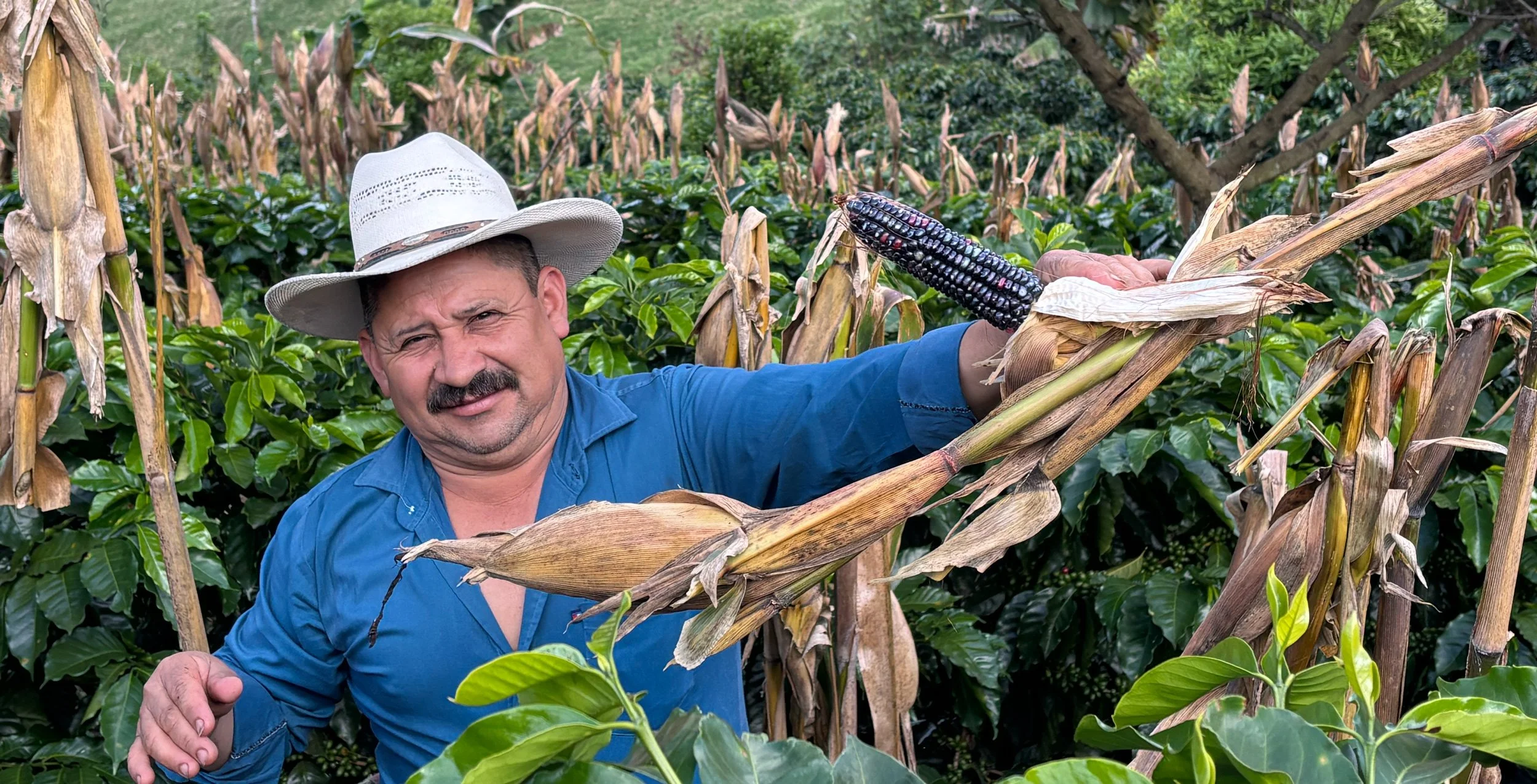
Depicted here is a member of the cooperative displaying his crop while guiding TWP staff on a tour of the farm plots. Looking more closely, one can distinguish between the lush green leaves of coffee plants, the “coffee cherries” still ripening, and the yellow stalks of maize. This ancient form of agroecology, often called a “milpa system,” is a type of polyculture that enhances soil health, employs organic fertilizers, protects watersheds, and promotes biodiversity.
TWP has helped Café Xinca acquire essential processing machinery and supplies, allowing the cooperative to expand its operation. Workers are paid fairly, housed properly, and recognized as vital members of the local and global economy. Our partnership with the development organization FUNDEBASE extends that investment to the next generation. FUNDEBASE helped establish a Xinca youth crew that conducts community-based science, most recently focused on testing rivers and waterways in the area. We believe strong economic systems grow from community-led, sustainable production that centers food sovereignty, farmer-to-farmer relationships, and the development of young people.