
Bridging the Gaps in Forest Restoration
TWP has long been known for planting trees.
But what’s most important to us is who, and how.
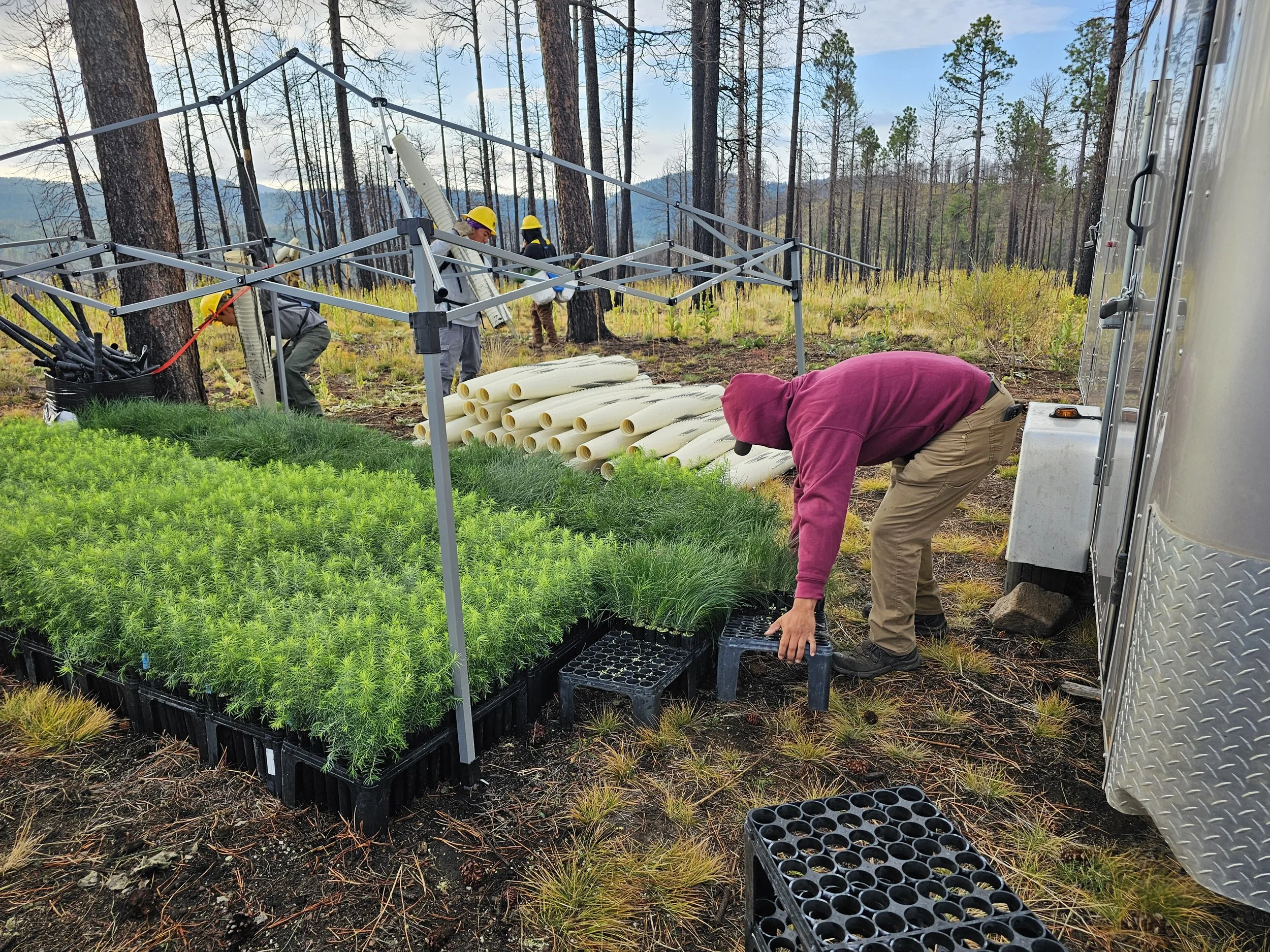
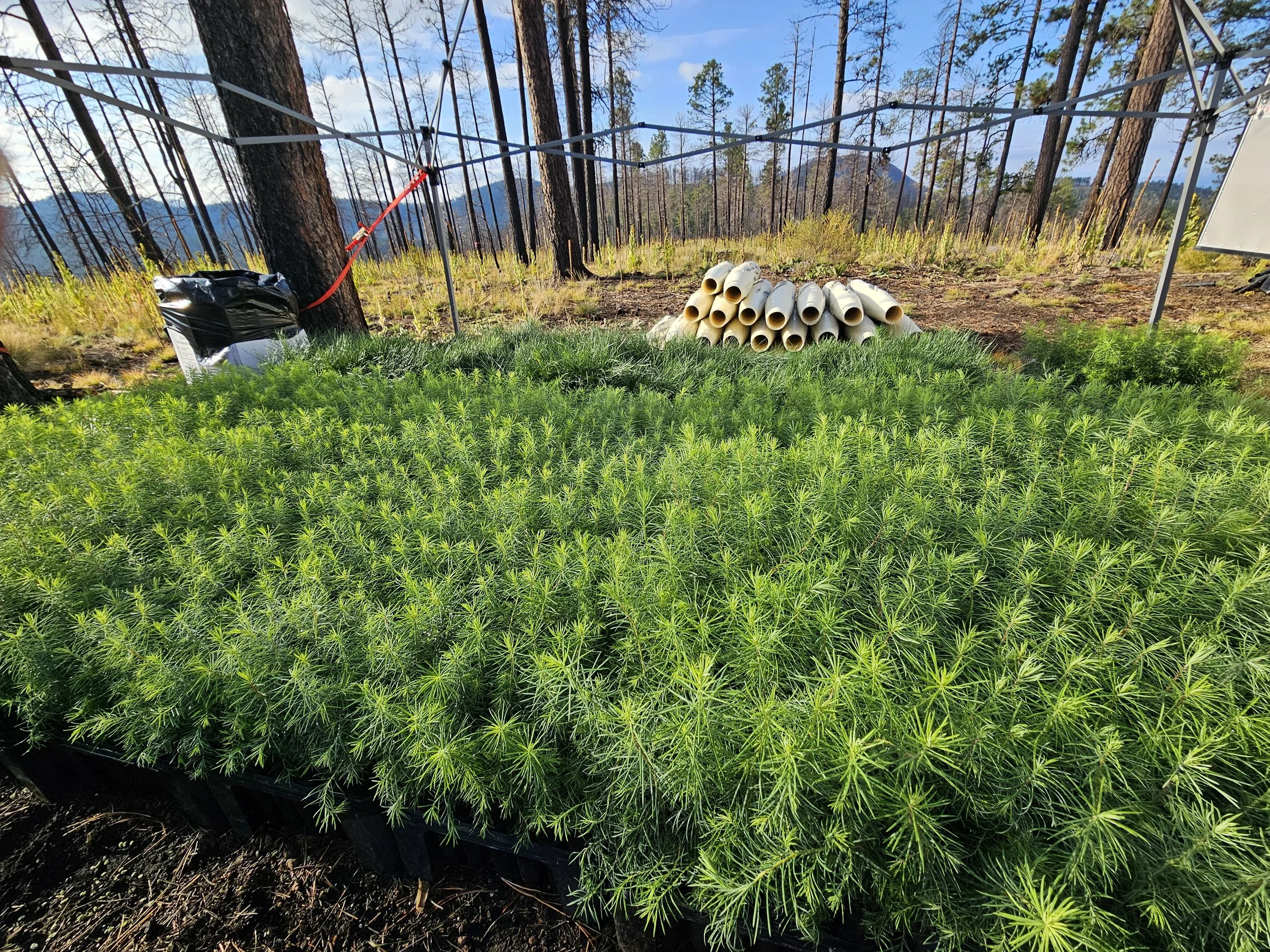
In Northern New Mexico, we’re continuing to see what’s possible when these pillars remain central. Over a two-week hitch in October, an all-Indigenous crew planted nearly 6,000 trees within the Cerro Pelado burn scar of the Jemez Mountains.
This planting was the first stage of a two-year effort to plant 45,000 trees in the area, begin restoring broader ecosystem health, and provide young Native people a connection to their lands through hands-on training and employment.
Alongside the deep commitment of our local partners, this connection has been made possible by innovative agreements between TWP and Sante Fe National Forest (SFNF) that enableTribal stewardship of SFNF lands. It’s unusual for Tribes to have stewardship access to ancestral lands within National Forest designation, but these historic agreements open doors to strengthen Tribal leadership and management, integrate Traditional Ecological Knowledge in restoration efforts, and employ the next generation of Indigenous land managers.
The partnership also boosts the Forest Service’s capacity to continue restoring public lands at a time when resources are scarce.
“With federal capacity at an all-time low, land management agencies are turning to nonprofit partners like Trees, Water & People to do planning, design, implementation, and monitoring. Organizations like ours build trust and relationships with communities, opening doors to rekindle healthy relationships for ancestral lands protection.”
— James Calabaza, TWP Indigenous Lands Program Director
From bridging gaps in restoration efforts, to bridging historically-tense relationships between federal agencies and Tribes, this effort is much more than planting trees.
This is a story of reconnection.
For most of the 21 Native youth employed through the tree planting crew, this was the first time they had connected to their ancestral lands of the Jemez Mountains.
For all, this was the first time they had taken part in restoring them.
At TWP, we’re proud that 6,000 trees are back in the ground. But we’re even more proud that 21 young people, guided by Indigenous leadership and knowledges, are earning a living by restoring them.