
Shaping the Future of Fire
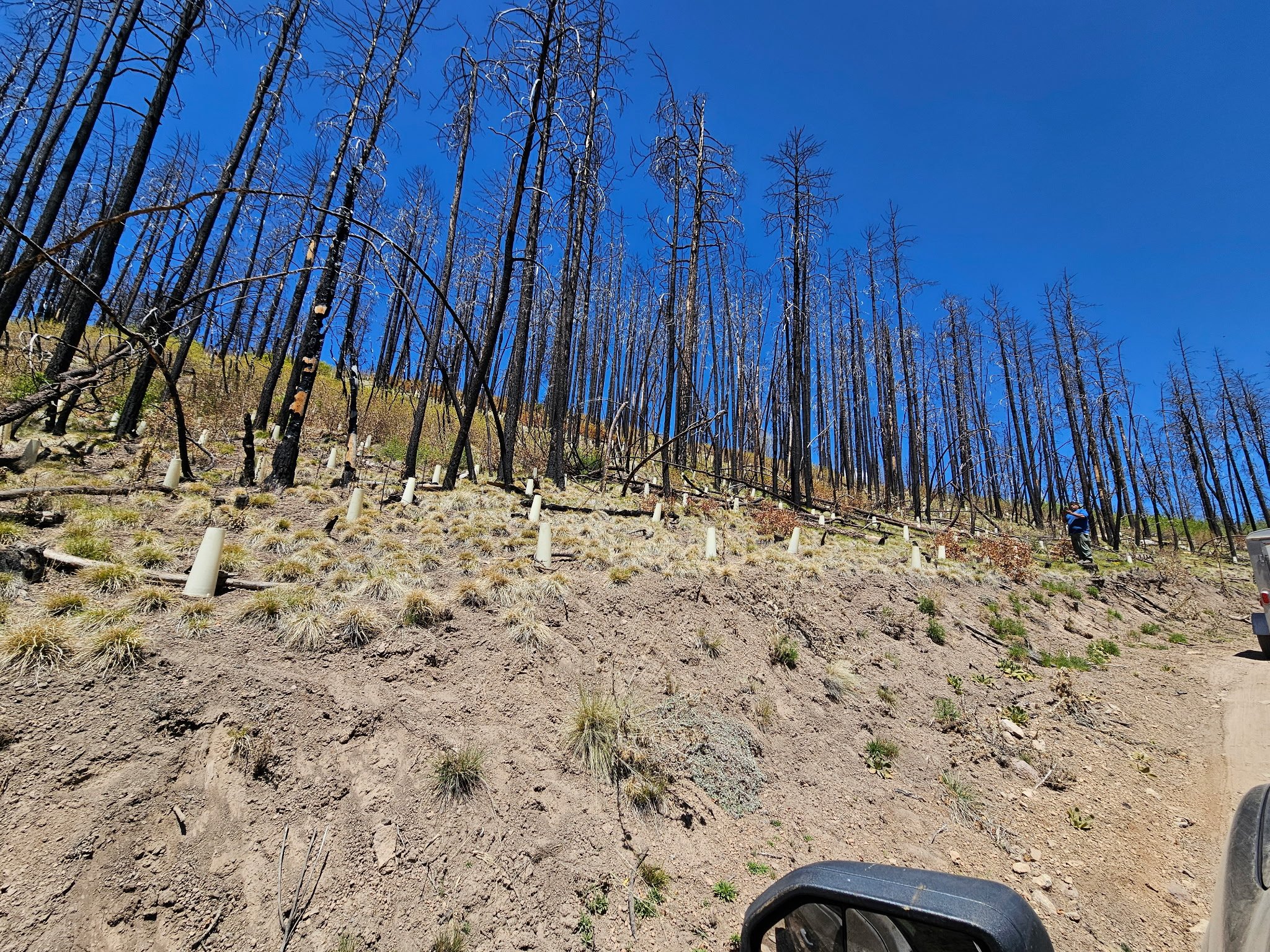
In the Spring of 2022, the Cerro Pelado fire burned more than 45,000 acres in the Southern Jemez Mountains of New Mexico.
This was just one of the many widespread wildfires that have damaged ancestral lands and watersheds, vital not only to local Pueblos but to countless other communities downstream.
Following an unprecedentedly dry and warm winter, megafires like these across the West are burning hotter and longer, and the need for post-fire restoration is growing as resources to support it are declining.
There is a long way to go, and countless other areas in need of restoration, but we’re proud to be making steady progress in reforesting the Cerro Pelado burn scar. This spring, we supported five Native youth from Taos Pueblo, members of the Rocky Mountain Youth Corps (RMYC), in Cerro Pelado reforestation efforts. Part of a multi-year effort to plant 45,000 trees in the area, the crew planted 2500 ponderosa pine and douglas fir seedlings across 15 acres during their spring hitch.
This hitch was originally cancelled due to dry and hot conditions, which strongly affect seedling survival, but much-needed spring rains made planting viable. This was a stroke of luck, but going forward, the conditions that make fires even more severe will also make post-fire restoration more difficult; the ability to adapt and respond when conditions change is crucial.
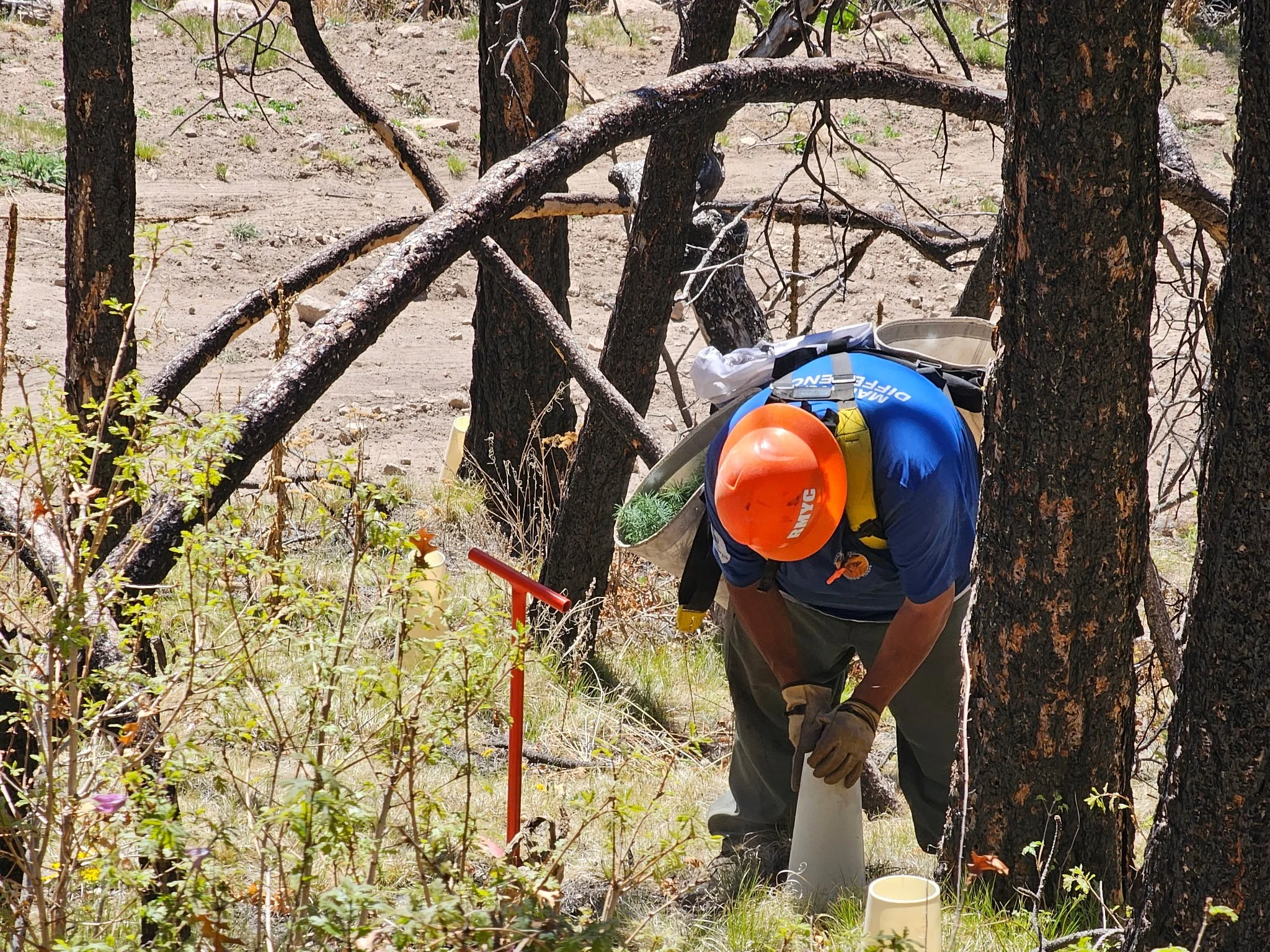
Collaborating with youth crews from Rocky Mountain Youth Corps and the Ancestral Lands Conservation Corps (ALCC) has made this on-the-ground adaptability possible while also providing much-needed employment opportunities for Native youth. These youth face many barriers to accessing workforce readiness programs, from economic opportunity, to limited familial capacity, to access to education, which youth corps programs help to address. Though these programs continue to face their own capacity and funding challenges, they also hold huge opportunity to support Indigenous youth while rebuilding wildfire resilience across the West.
Ultimately, the wildfires we experience today are, at least in part, a result of decisions made before us. But that also means the forest management we practice today will be felt by the generations after us.
Let’s shape that future wisely.