
Conservation in Action
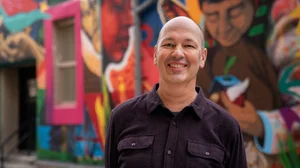
James Calabaza: “As hunting season is upon us, we encourage members of our community to think about their role in being an ethical hunter. What does that mean to you? How are you going to carry those lessons and values forward to your children, to your family? How are they going to carry that forward? Because, you know, that really is conservation. It's not just the tangible things we see on the ground. It's not just building the structures or planting trees. It's the stories, it's the legacies. It’s those moments and memories that carry us forward.”

In late August, members of our Indigenous Lands team, alongside local Tribes, had the opportunity to participate in a traditional bison harvest at the Zapata Ranch Preserve.
James: “All four of our staff who participated are Indigenous, and for three of us, this was our first time ever participating in a bison harvest ... .Though we have stories, we have dances, we have songs that honor the bison, this was something that many of our people have never been able to do.”
Managed by the Nature Conservancy, the preserve is home to nearly 1800 free-roaming bison, and Tribal-led stewardship and traditional harvest by local Tribes are becoming central in Zapata’s vision for the future.
James: “When we talk about conservation, cultural harvesting is part of it. Conservation is not just about the work we do on the ground, the restoration work, the stewardship. It's about protecting those knowledge systems, those traditions, those legacies, those people that hold that knowledge and pass it from generation to generation.”
The majority of meat harvested was distributed to the Southern Ute & Ute Mountain Ute Tribes, but TWP staff members were lucky to share in the offering.
“We are so grateful not only for participating but for the meat we were able to bring back. It’s going to feed our families, but also it brings something else back….It brings those stories, of my community and my ancestors, to the table. It doesn't end at the site or the workshop or the field. It carries on to people’s tables and people’s spaces, which is conservation in action.”
For us, dignified livelihoods are so much more than an opportunity to make an income – they should be an opportunity to be fully who we are.
James: “This opportunity really uplifted our spirits as Indigenous peoples. We got to be Indigenous while on the job….Dignified livelihoods is about being culturally rich, being rich in the experience of what we had that day, of laughter, community, paying respect and homage to our relatives for their sacrifice, and then honoring our ancestors for teaching us these medicinal approaches towards land management and community health. It allowed me to be who I am as an Indigenous person.”